Arkle Boyce Architects
The Proposals
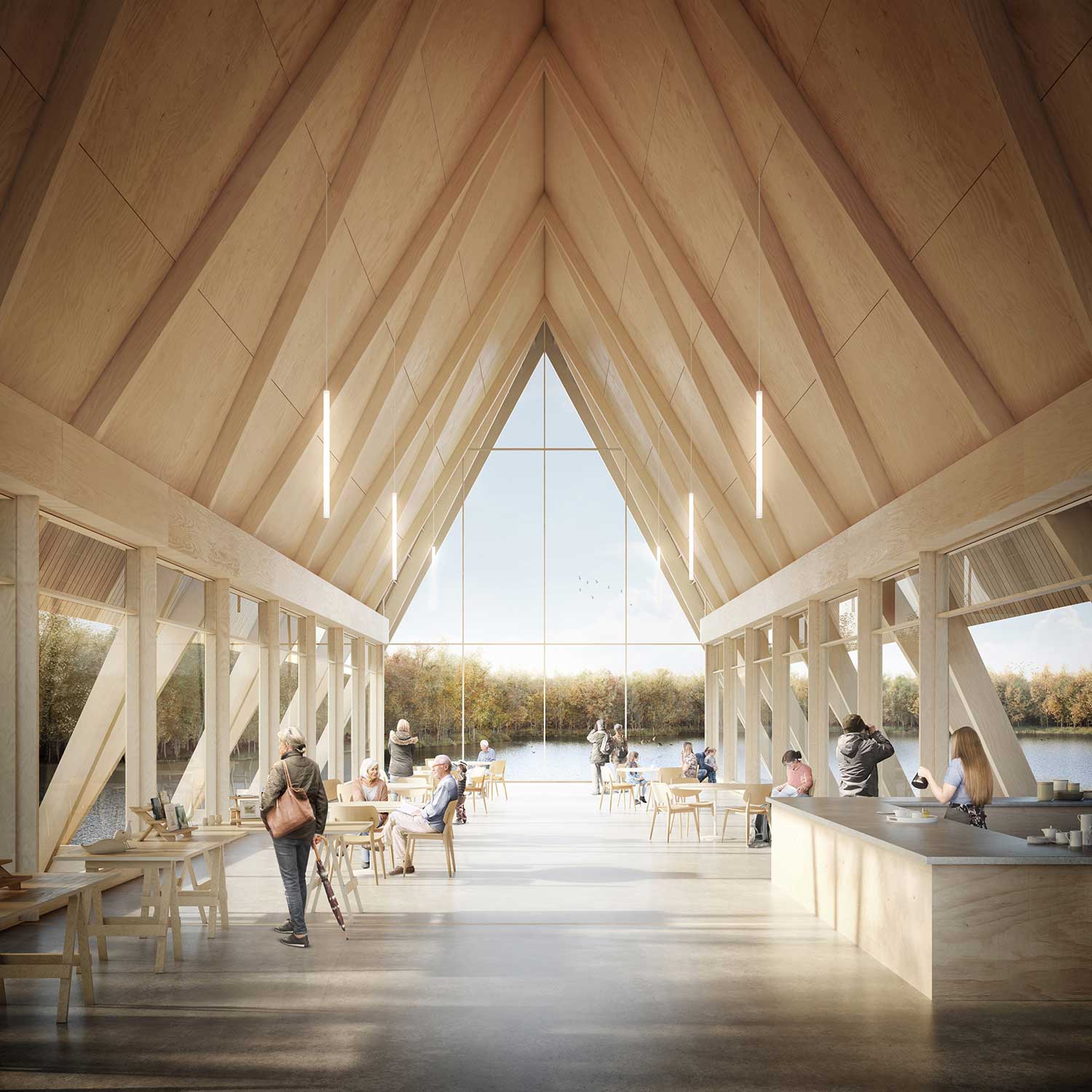
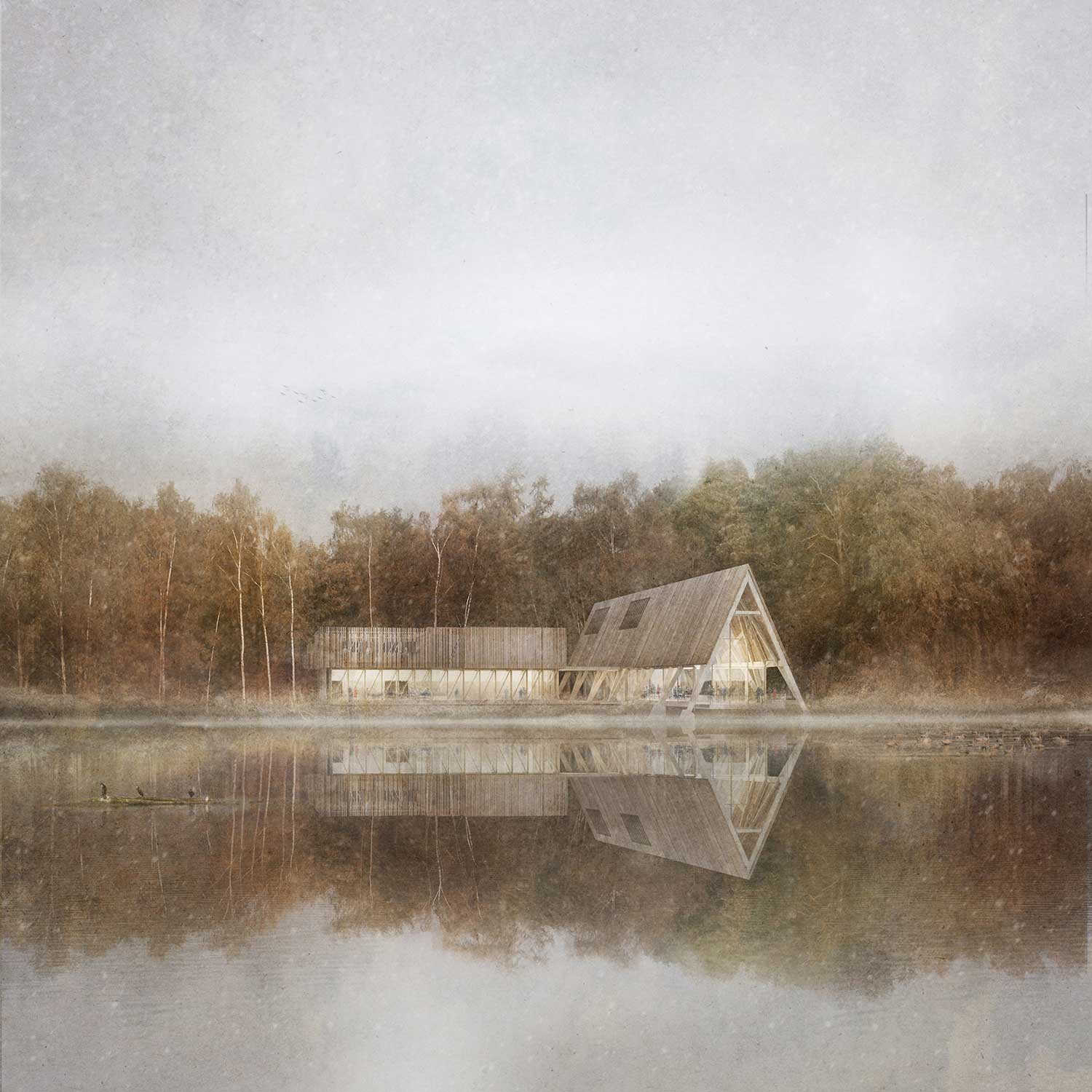
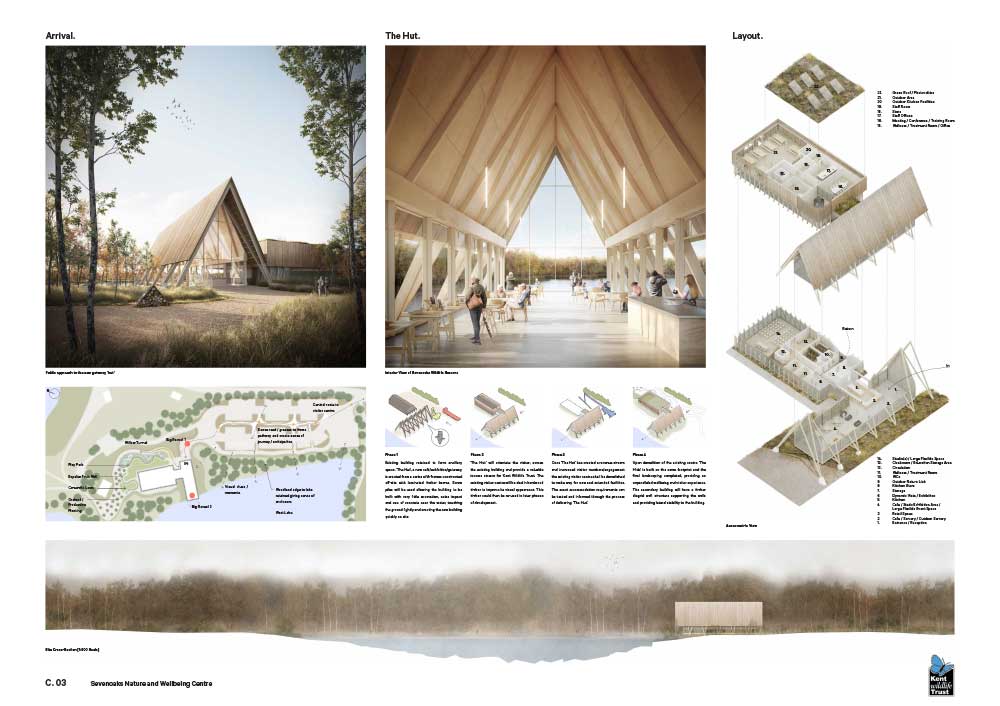
The proposals are separated into two distinct forms; a gateway building [The Hut], which acts as a landmark for the site, and secondly, a discreet bird hide-style pavilion [The Hide] sited on the footprint of the existing building.
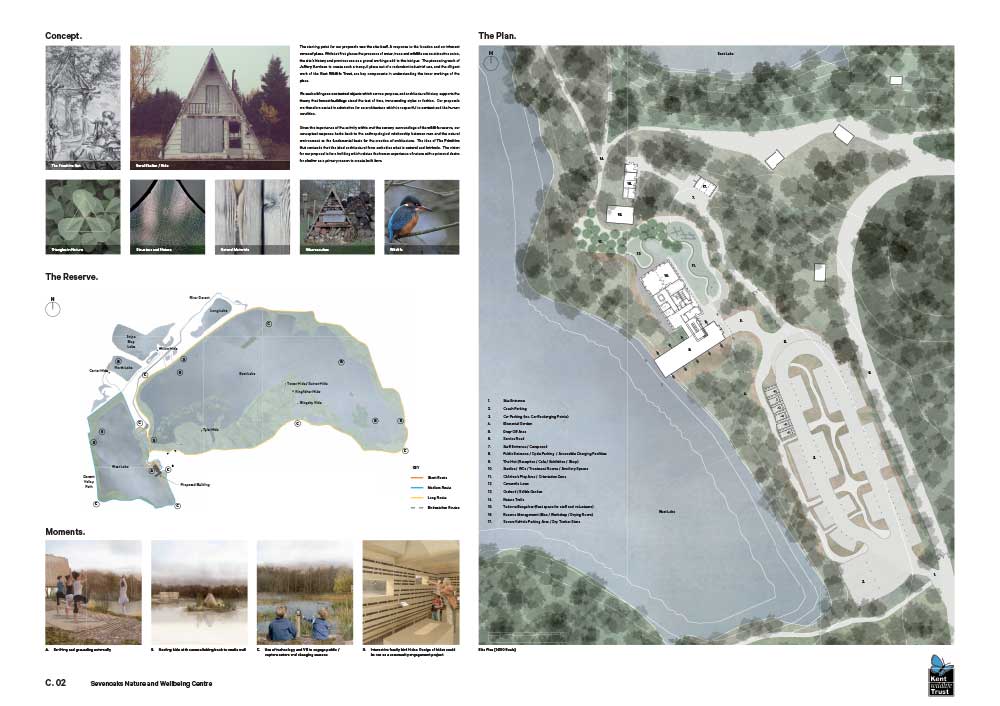
The proposals allow for a phasing of the scheme [please refer to the diagrams on board C2] in which The Hut would be built first, whilst retaining the existing building; which would then be over-clad in timber and could be re-used in later phases. The Hut building will provide a flexible multi-functional facility helping to orientate visitors whilst screening the existing retained building.
The Hut is a gateway building, greeting visitors and giving the centre an identity. It forms an attractive building which sits comfortably in the wooded landscape and reflects the natural attributes we all look for when surrounding ourselves with an abundance of wildlife. The building carefully affords the opportunity to sit discreetly and observe whilst immersing the visitor in a close quarters encounter at the waters edge. The glazed perimeter prevents noise and disturbance from visitors disrupting the wildlife, preserving tranquility for the birds and those using the nature reserve for bird watching or other quiet, contemplative activities.
The conjoined buildings are distinct yet complimentary in their language, structure and materiality. The buildings display their own identity, which owes to their own functionality, operation and experiential quality.
The buildings express honesty in their structural and material integrity, creating a legible construction without need for decoration or needless elaboration.
Lightweight Siting
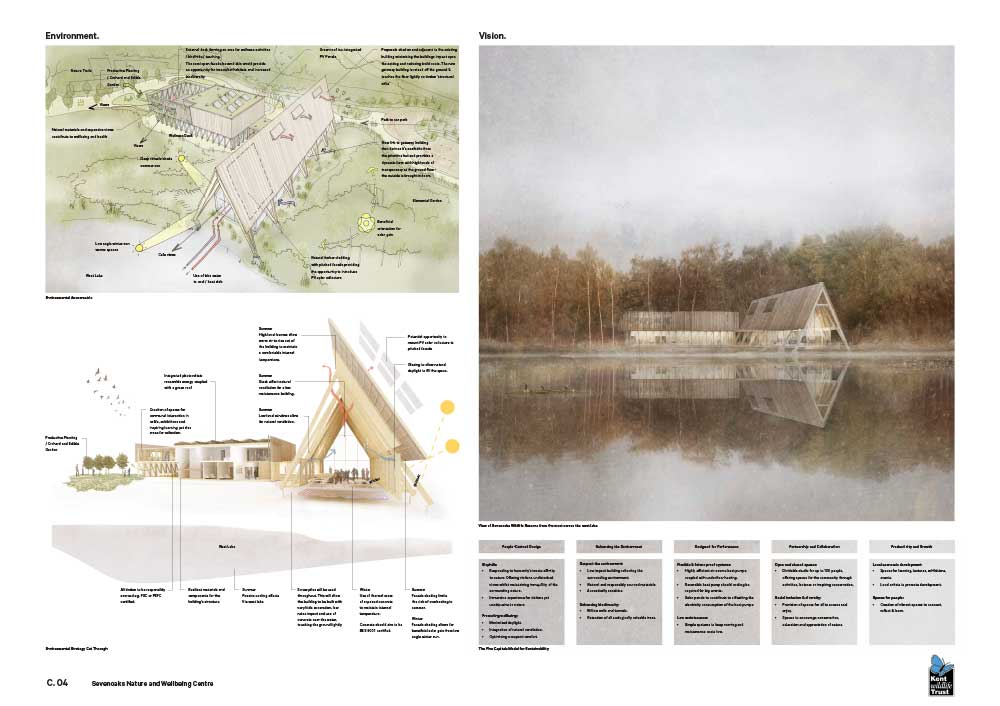
The buildings sit delicately on the site, deliberately raised on timber piloti to reduce the impact on the site and indicate the respect for the environment.
This removes the need to dig intrusively to create foundations and the like. Simple screw piles would be drilled into the ground off which the timber A-frames would be suspended, meaning a more expedient construction process.
Structure is derived from a desire to use sustainable materials in an expressive way, as is typical of frame buildings. Timber A-frames specifically, offer the appearance of an efficient structure and are one of the simplest and most robust forms of natural engineering.
Both buildings adopt a complimentary language of exposed timber frames, allowing them to display their own character, yet be linked by a common engineering language.
Wellbeing
Our adopted Wellbeing strategy is a consistent thread through all our work; every action should make a definable difference, all should be human centric, user focused with a continuing emphasis on increasing the wellbeing of the individual and the collective community whilst safeguarding nature and the environment. All should be developed in a sustainable manner, to meet both the needs of the community and the societal, environmental and economic goals of the Kent Wildlife Trust.
The Five Capitals Model
Our design team is committed not only to reducing and managing the environmental impacts of the proposed development, but also in seeking to create value and generate a flow of social, economic and environmental benefits to all stakeholders and investors.
As a result, the present design strategy has been developed on the basis of the Five Capitals Model for Sustainability, to capture the multi-faceted benefits that the proposed development would bring to the site, the environment, future building users, local community and economy as well as stakeholders. Refer to board C. 04 for details.